
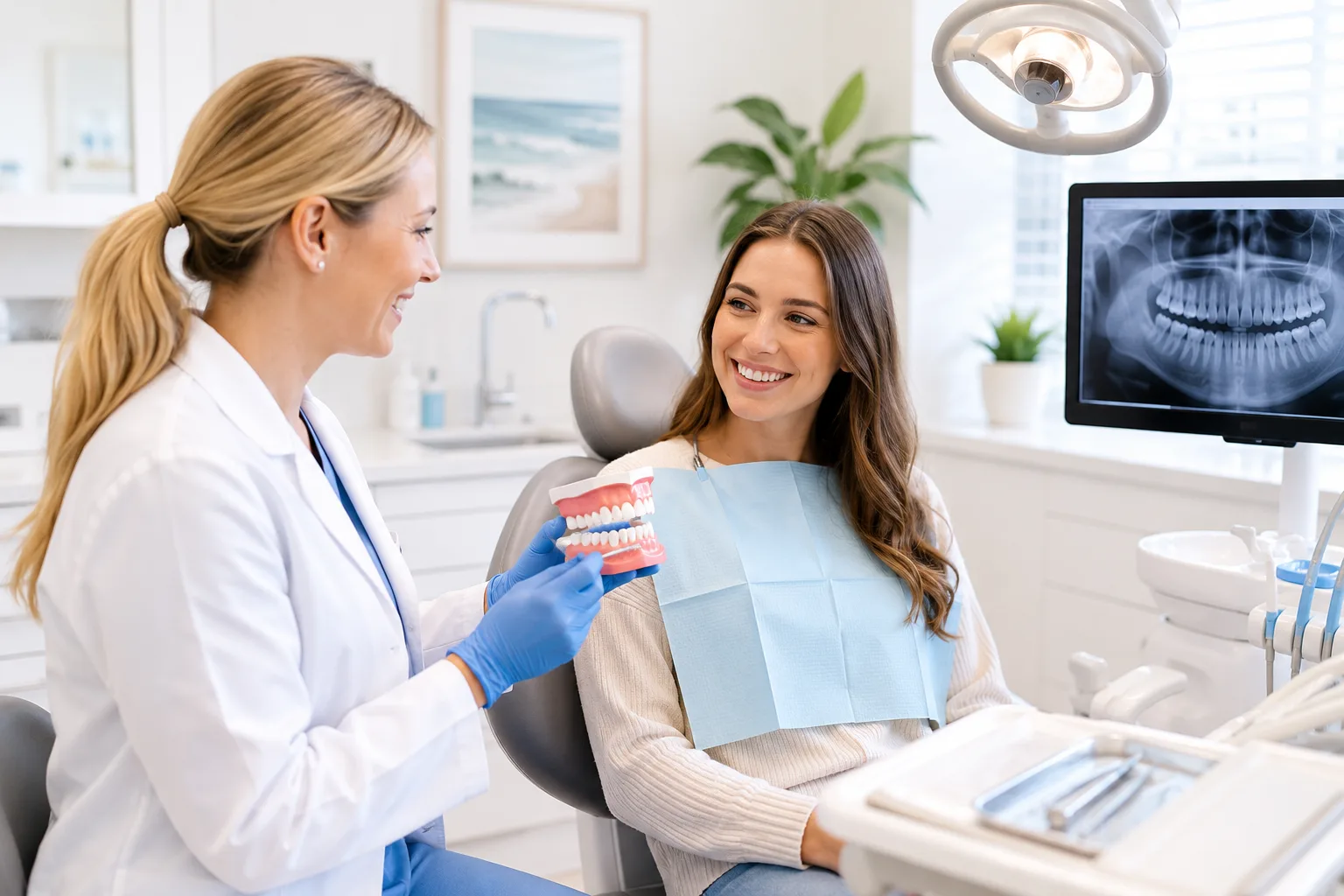
A straighter smile can make brushing easier, improve confidence, and support long-term oral health. Still, many adults and teens hesitate to pursue orthodontic care because they do not want traditional metal braces. Clear aligners offer another possibility.
For patients researching Invisalign in Sterling, IL, understanding how aligners work is an important first step. Invisalign treatment uses a planned series of removable, transparent trays to gradually guide teeth toward new positions. The trays are discreet, but successful treatment still requires professional planning, consistent wear, and regular dental care.
This article provides general educational information and is not a diagnosis or treatment recommendation. A dentist or orthodontist must evaluate the teeth, gums, bite, and dental history to determine whether clear aligners are appropriate.
What Is Invisalign?
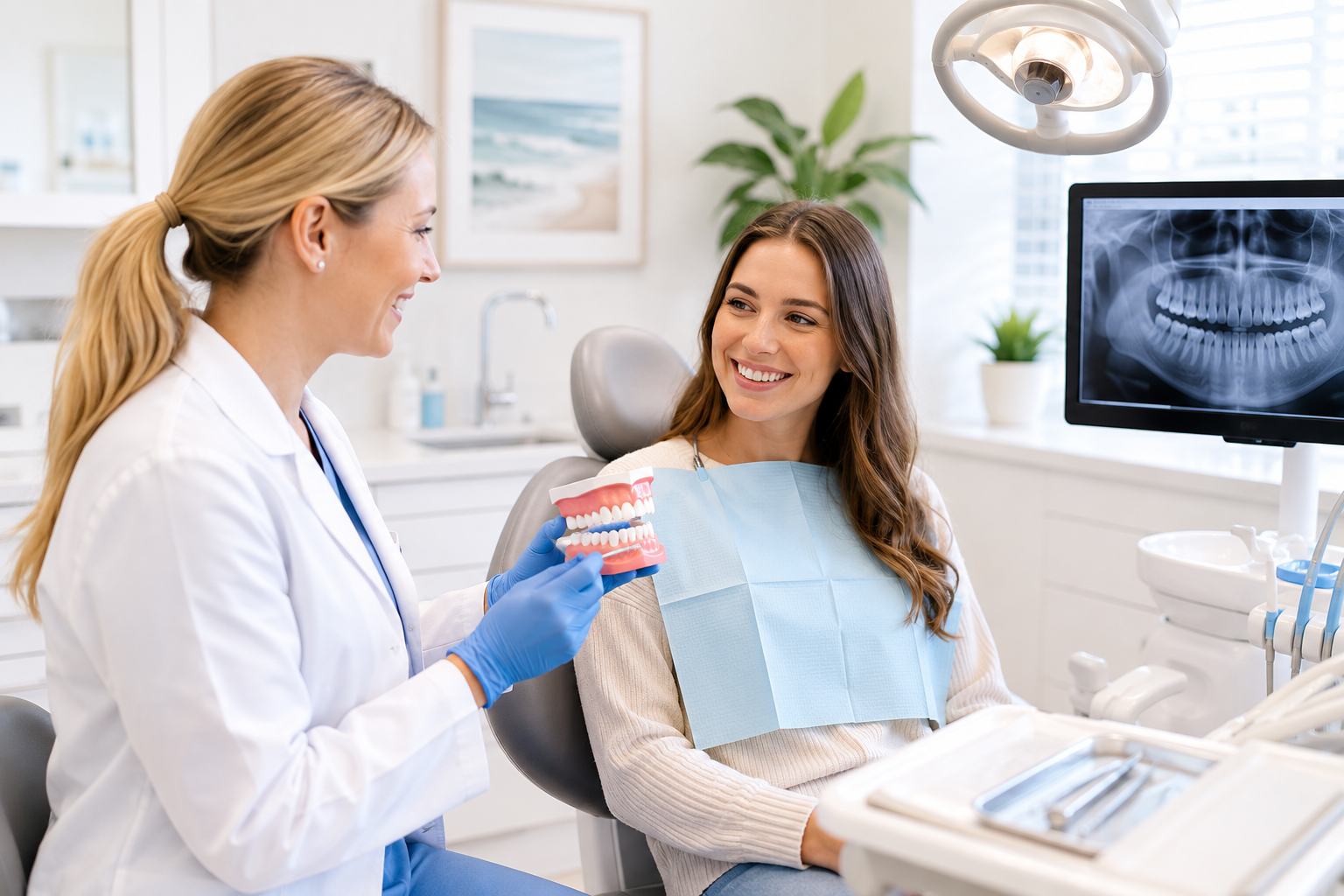
Invisalign is a specific brand of clear aligner treatment. The system uses custom-made plastic trays that fit closely over the teeth. Each set applies controlled pressure to selected teeth according to a digital treatment plan.
Patients progress through a sequence of aligners as directed by their clinician. Although the trays may look simple, the treatment behind them is carefully planned. Tooth movement depends on factors such as root position, bone support, gum health, bite relationships, and how consistently the aligners are worn.
It is also helpful to remember that not every clear aligner system is Invisalign. Patients who prefer that brand should ask which system a dental office uses and why it is being recommended.
What Dental Concerns Can Clear Aligners Address?
Clear aligners may be considered for several common orthodontic concerns, including:
- Crowded or overlapping teeth
- Gaps between teeth
- Some overbites, underbites, and crossbites
- Teeth that have shifted after earlier orthodontic treatment
- Mild to moderate alignment concerns
However, appearance is only one part of the assessment. Two patients with similar-looking smiles may need very different treatment because their roots, jaw relationships, or gum health differ.
Some complex tooth movements or bite problems may be treated more predictably with braces, additional dental procedures, or care from an orthodontist. A responsible consultation should explain both the benefits and limitations of each option rather than assuming that clear aligners are right for everyone.
What Happens During an Invisalign Consultation?
A clear aligner consultation usually begins with a discussion of the patient’s goals. Some patients want to correct one noticeable tooth, while others are concerned about crowding, spacing, or the way their teeth meet.
The clinician then examines the teeth, gums, and bite. Dental images, X-rays, photographs, or digital scans may be recommended depending on the patient’s needs. These records help reveal issues that cannot be assessed by looking at the front of the smile alone.
The evaluation may also identify concerns that should be addressed before orthodontic treatment begins. For example, active gum disease, untreated decay, or other oral health problems may need attention first. Moving teeth in a healthy oral environment helps make treatment safer and easier to manage.
Before agreeing to care, patients should receive an explanation of:
- The proposed treatment goals
- Whether Invisalign or another option is recommended
- What results are realistically achievable
- The estimated treatment process
- Potential limitations or risks
- The total expected cost and payment terms
- The need for retainers after treatment
What Is It Like to Wear Clear Aligners?
Clear aligners are removable, but they must be worn according to the clinician’s instructions. Leaving them out too often can allow teeth to move away from the planned positions, which may delay progress or affect how later trays fit.
Most patients remove their aligners for meals and for drinks other than plain water. Eating with the trays in can damage or stain them. Teeth should be cleaned before the aligners are put back whenever practical, especially after sugary or acidic foods.
Pressure and temporary tenderness
A new aligner may create a feeling of pressure or temporary tooth tenderness. That sensation does not necessarily mean something is wrong, but severe pain, a sharp edge, significant gum irritation, or an aligner that will not fit should be reported to the treating clinician.
Speech changes
Some people notice a slight change in speech when they first begin wearing aligners. The tongue often adapts as the patient becomes accustomed to the trays. Persistent speech or comfort concerns should be discussed at a follow-up visit.
Attachments and other features
Small tooth-colored shapes called attachments may be placed on certain teeth. These features help the aligners grip and guide specific movements. They are noticeable at close range but are generally less visually prominent than conventional brackets.
Benefits and Limitations to Consider
Many patients are drawn to Invisalign because the trays are discreet and removable. That can make meals, brushing, and flossing more familiar than they are with fixed braces. Aligners may also fit comfortably into work, school, and social routines.
Removability is both an advantage and a responsibility. Aligners cannot work as planned while sitting in a case. Patients who frequently forget, lose, or remove their trays may find fixed braces easier to manage.
Clear aligners also do not eliminate the need for checkups. The clinician must monitor tooth movement, gum health, bite changes, and tray fit. In some cases, the treatment plan may need adjustment or additional aligners.
How to Care for Aligners and Teeth
Good oral hygiene is especially important during orthodontic treatment. Aligners hold close to the teeth, so putting them back over food debris or sugary residue can create an unhealthy environment.
Helpful habits include:
- Brushing gently but thoroughly with fluoride toothpaste
- Cleaning between the teeth every day
- Rinsing aligners with cool or lukewarm water
- Using only cleaning products recommended by the dental team
- Avoiding hot water, which may distort the trays
- Keeping aligners in their case when they are not being worn
- Continuing routine dental examinations and professional cleanings
Patients should not use harsh household cleaners on their trays. If aligners become cracked, lost, or unusually discolored, the dental office should be contacted for instructions rather than moving to another set without guidance.
How Much Does Invisalign Cost in Sterling, IL?
There is no single fee that applies to every Invisalign patient. Cost depends on the complexity of the tooth movement, the type and number of aligners needed, monitoring visits, possible refinements, and what is included in the treatment agreement.
Dental insurance may contribute when a plan includes orthodontic benefits, but coverage, age restrictions, waiting periods, and benefit limits vary. Patients can ask the dental office to help review benefits, but the insurance carrier makes the final coverage decision.
When comparing estimates, it is wise to look beyond the advertised price. Ask whether records, appointments, replacement trays, refinements, and retainers are included. A written estimate can make it easier to understand the complete financial commitment.
Why Retainers Matter After Invisalign
Finishing the final aligner does not mean the teeth will automatically stay in place. Teeth can shift after orthodontic treatment because the surrounding tissues continue to respond to their new positions and because natural movement can occur over time.
A retainer helps protect the result. The type of retainer and wearing schedule should be prescribed by the treating clinician. Patients should ask about replacement costs, cleaning instructions, and what to do if a retainer stops fitting properly.
Questions to Ask When Choosing Clear Aligner Care
A thoughtful consultation should leave the patient feeling informed rather than pressured. Useful questions include:
- Am I a suitable candidate for Invisalign?
- Are my teeth and gums healthy enough to begin?
- What alternatives should I consider?
- Which clear aligner brand would be used?
- Will attachments or other procedures be needed?
- How will progress be monitored?
- What happens if the teeth do not move as expected?
- What is included in the quoted fee?
- What type of retainer will I need?
The right plan should account for the entire bite and long-term oral health, not just the appearance of the front teeth.
Frequently Asked Questions About Invisalign
Is Invisalign painful?
Patients may notice pressure or temporary tenderness when beginning a new tray. Significant pain, swelling, gum injury, or a poorly fitting aligner warrants a call to the treating dental professional.
Can a patient eat while wearing Invisalign?
Aligners are generally removed for meals and snacks. Patients should follow their clinician’s specific instructions and clean their teeth before replacing the trays whenever possible.
Can Invisalign treat every orthodontic problem?
No. Clear aligners can address many alignment and bite concerns, but some cases may benefit from braces, additional procedures, or specialist care. An examination is needed to compare suitable options.
Will clear aligners affect daily life?
Most routines can continue, but patients need to plan for tray care, oral hygiene, meals, and consistent wear. Carrying a case and a small dental-care kit can make aligner management easier away from home.
What happens if an aligner is lost?
The patient should contact the dental office promptly. Depending on the treatment stage, the clinician may recommend wearing a previous tray, moving forward, or ordering a replacement. Patients should not make that decision without professional guidance.
Can someone get Invisalign if they have crowns or other dental work?
Existing restorations do not always prevent clear aligner treatment, but they can affect planning and the use of attachments. A clinician must evaluate the condition and location of crowns, bridges, implants, and other dental work.
Exploring Invisalign in Sterling, IL
Clear aligners can provide a discreet and convenient path toward a straighter smile for appropriate candidates. The best results begin with a careful evaluation, realistic expectations, and a plan that considers the teeth, gums, bite, and long-term retention.
Patients interested in Invisalign in Sterling, IL can contact Dental Care of Sterling at (815) 454-3709 or visit the office at 2000 Locust St, Suite B, Sterling, IL 61081. The team can answer questions about smile goals, discuss available treatment options, and explain whether an orthodontic consultation or referral may be appropriate.